3
Dutch burn centres
2018
Started with QuestManager
+ Dashboard
Custom patient dashboard in the consulting room
The challenge
The three Dutch burn centres wanted to structurally integrate patient-reported outcomes (PROMs) into the aftercare of burn patients. The aim was for patients to complete questionnaires at home at fixed points during their recovery, covering their physical, psychological and social health. This called for a user-friendly solution giving patients easy access, via computer, tablet or smartphone, to the right questionnaires within predefined measurement pathways.
“We wanted to start working with outcome-based care; that is only possible if you include PROMs in the care you deliver. This could not be done from the EHR, and even where the EHR can do it, EHR vendors offer very limited visualisation of those outcomes.”
In addition, there was a need not only to store the collected PROM data, but also to make the most of it during outpatient consultations. Clinicians wanted quick insight into the outcomes, to recognise trends and to discuss them with patients during the consultation. That is why a custom dashboard was developed together with Topicus, presenting the PROM results clearly and practically for use in the consulting room.
Experiences and impact
With iQoutcome (formerly QuestManager), the burn centres have a reliable and efficient system for sending out and collecting PROM questionnaires. The way the measurement pathways are set up ensures that patients are automatically invited to complete questionnaires at the right moments. This provides structural insight into patients’ recovery, without extra administrative burden for clinicians.
The centres started with QuestManager in 2018. Over the years there were phases when things went better and phases when they went less well. An important lesson is that questionnaire results really need to be fed back to patients: without that feedback, people are less motivated to keep completing the questionnaires. Another challenge was the involvement of the hospitals’ BI teams in this process. Their capacity turned out to be smaller than expected. In the end, Topicus took a lot off their hands, allowing the centres to move forward.
In practice, patients complete the questionnaires and describe what they would like to discuss during their outpatient consultation. Clinicians use the patient dashboard to gain insight into patients’ recovery.
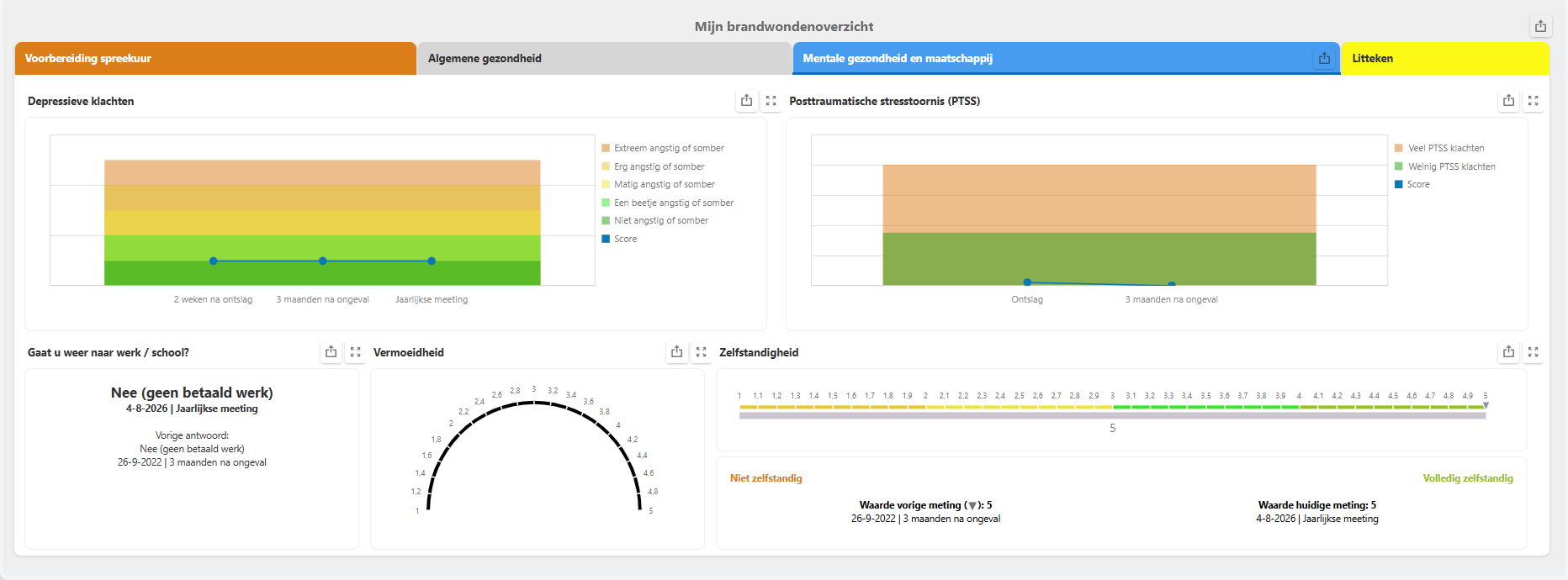
The custom dashboard translates the collected data into immediately usable information for the healthcare professional. During outpatient consultations, the results can easily be consulted and discussed. This supports the conversation between patient and clinician and contributes to more person-centred care. Trends and changes in perceived health become visible sooner, so signals can be discussed in time and followed up where needed.
As a result, the centres now deliver outcome-based care and patients play a bigger role in their own recovery and treatment. The dashboard supports shared decision-making, which plays a major role in practice.
“The dashboard literally shows what the patient wants to work on and what his or her treatment goal is.”
Collaboration between clinicians also benefits: it is easier to see in which areas a patient needs support, and where necessary they are referred to the right professional. For the organisation as a whole, iQoutcome plays an important role in the shift towards more client-centred care, as progress in this area can now be monitored very well.
The collaboration with Topicus is characterised by short lines of communication and a shared focus on practical solutions. By closely matching the specific needs of burn care, a solution has been realised that adds value both in daily practice and at organisational level. The combination of data collection and clear presentation of outcomes has strengthened the implementation of outcome-based care within the burn centres.
Future vision and recommendations for other organisations
For the coming years, we see plenty of opportunities to integrate PROM data even further into care processes. By combining the collected outcomes with other clinical data, an increasingly complete picture of burn patients’ recovery emerges. This enables us to monitor developments better, further personalise care and evaluate the care delivered even more effectively.
“We would like to invest even more in dashboarding options, for example the ability to show patient-like-me information.”
Our recommendation to other healthcare organisations is not only to invest in collecting PROM data, but above all to pay attention to how this data comes back into the care process. A user-friendly dashboard and a good fit with daily practice are essential. By involving healthcare professionals from the start in the design and development of the solution, you create a system that is actually used and delivers maximum value for both patients and clinicians.
500+ healthcare professionals improve patient care daily